Why Your Kids Don’t Listen (And It’s Not What You Think)
If you have kids, you’ve probably had this moment more times than you can count.
You say, “Brush your teeth.” Nothing happens. You say it again. Still nothing. By the third time, you’re annoyed. By the fourth, your tone has changed, and now everyone’s frustrated—and somehow you’ve become the bad guy in the process.
I’ve got three kids—8, 12, and 14. They’re all in different stages, with completely different personalities, but this pattern shows up with all of them. For a long time, I assumed it was a listening issue. Maybe they needed more discipline, more structure, or clearer consequences. That’s the default assumption most of us make as parents.
But that’s not actually what’s going on.
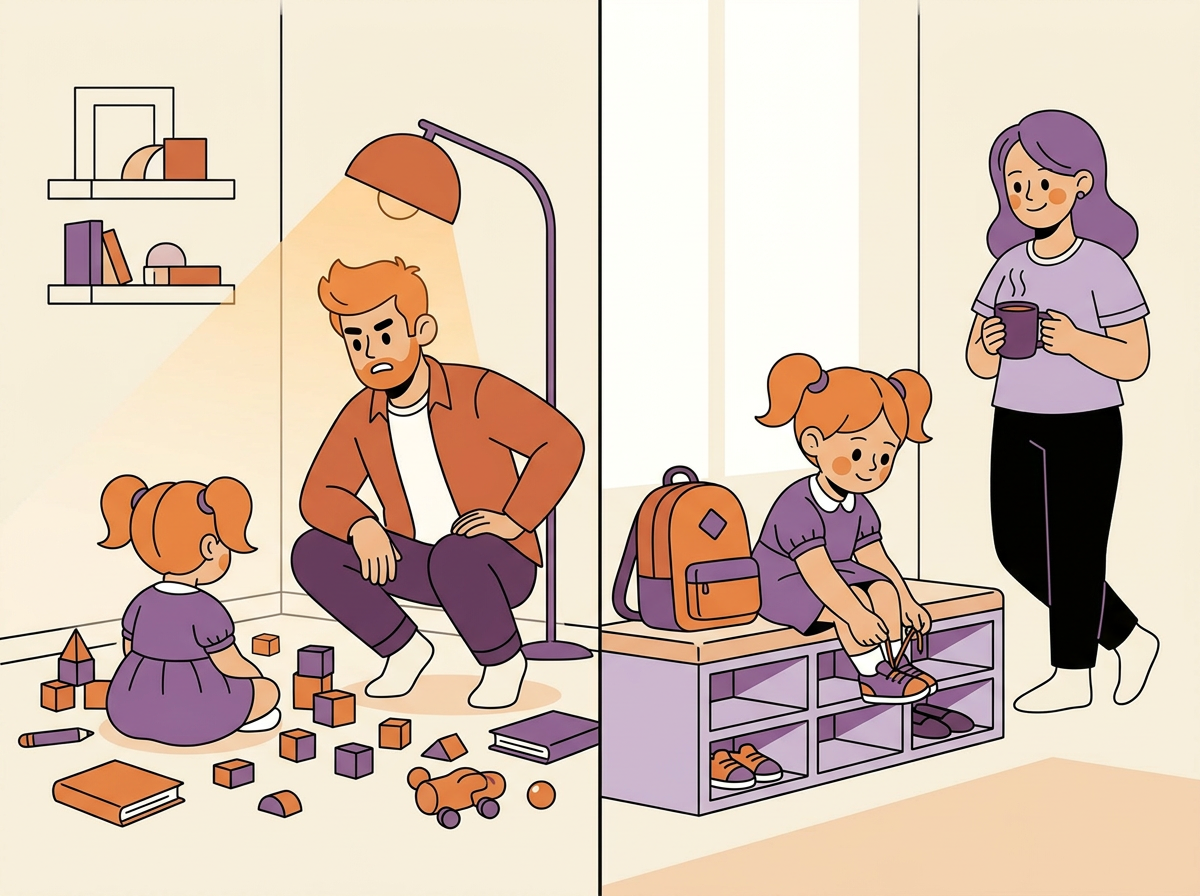
The uncomfortable truth is that most kids aren’t ignoring you. They’ve just been trained to wait for you.
Every time we remind our kids to do something, we solve the problem in the moment, but we also reinforce the same behavior for the future. Without realizing it, we become the trigger. Not the time of day, not the routine, not the expectation—us. So instead of acting on their own, they wait. Not because they’re lazy or defiant, but because that’s how the system works in their world.
And that’s really the issue: it’s not a discipline problem, it’s a systems problem.
There’s a simple framework behind how habits actually form: cue, routine, reward. It’s how adults operate, and it’s no different for kids. But when you look at how most of us run our homes, that loop is broken. There’s no consistent cue, just random reminders. The routine isn’t always clear or repeatable. And the only “reward” is avoiding getting in trouble, which isn’t exactly motivating.
So the habit never sticks.
In fact, every time we step in to remind them, we reset the loop again. We reinforce the idea that action doesn’t happen until someone tells them to act. Over time, that becomes the default. What we think is helping—reminding, prompting, pushing—is actually creating dependence.
That’s the part that took me a while to really accept.
The shift isn’t about getting louder or stricter. It’s about building something better in place of the reminders. It starts with removing yourself as the cue. If the trigger is always you, they will always wait for you. Replacing that with something consistent—like a specific time, a visual checklist, or a predictable sequence—gives them something to act on without needing you in the middle of it.
From there, the routine itself has to be simple and repeatable. Not ten steps, not vague instructions—just something clear enough that it can become automatic over time. And finally, there has to be a reason for it to repeat. That doesn’t mean bribing them with screens or rewards every time, but it does mean creating a sense of progress, ownership, or responsibility. The feeling of “I did that on my own” is more powerful than most parents realize.
This isn’t really about brushing teeth or getting out the door on time. It’s about building a person who follows through, who takes ownership, and who doesn’t need someone constantly hovering over them to function. Because eventually, we’re not going to be there to remind them.
Once I started looking at it this way, things changed. Not overnight, and not perfectly, but noticeably. Instead of asking why my kids weren’t listening, I started asking what system was missing. And when the system improved, the reminders started to fade.
Not completely—because let’s be honest, that’s not realistic—but enough that it stopped feeling like a constant battle.
That shift is what led me to start building Check, Play, Again. Not another chore chart or reminder tool, but something designed to help kids know what to do, do it consistently, and start owning it without being told multiple times.
That said, this is very much a work in progress. I’m building it while living it—with three kids at different stages—and I know there’s a lot I haven’t figured out yet. Some things work great, some things need improvement, and a lot of it comes down to real-world feedback from other parents.
If this resonates with you, I’d love for you to try it out and tell me what’s working, what’s not, and what you wish it did better. The goal isn’t to build something perfect—it’s to build something that actually helps.
The goal isn’t “listen better.”
It’s “do it without being asked.”
Less reminding. More responsibility.